If you'd told me 20 years ago that German Riesling would be one of the fastest-growing categories at Great Wines Direct, I'd have been sceptical. The UK's relationship with German wine has been complicated — haunted by memories of cheap Liebfraumilch and Blue Nun. But the Mosel in 2026 is a completely different story, and it's one of the most exciting wine regions I work with.
The Mosel: A Quick Geography Lesson
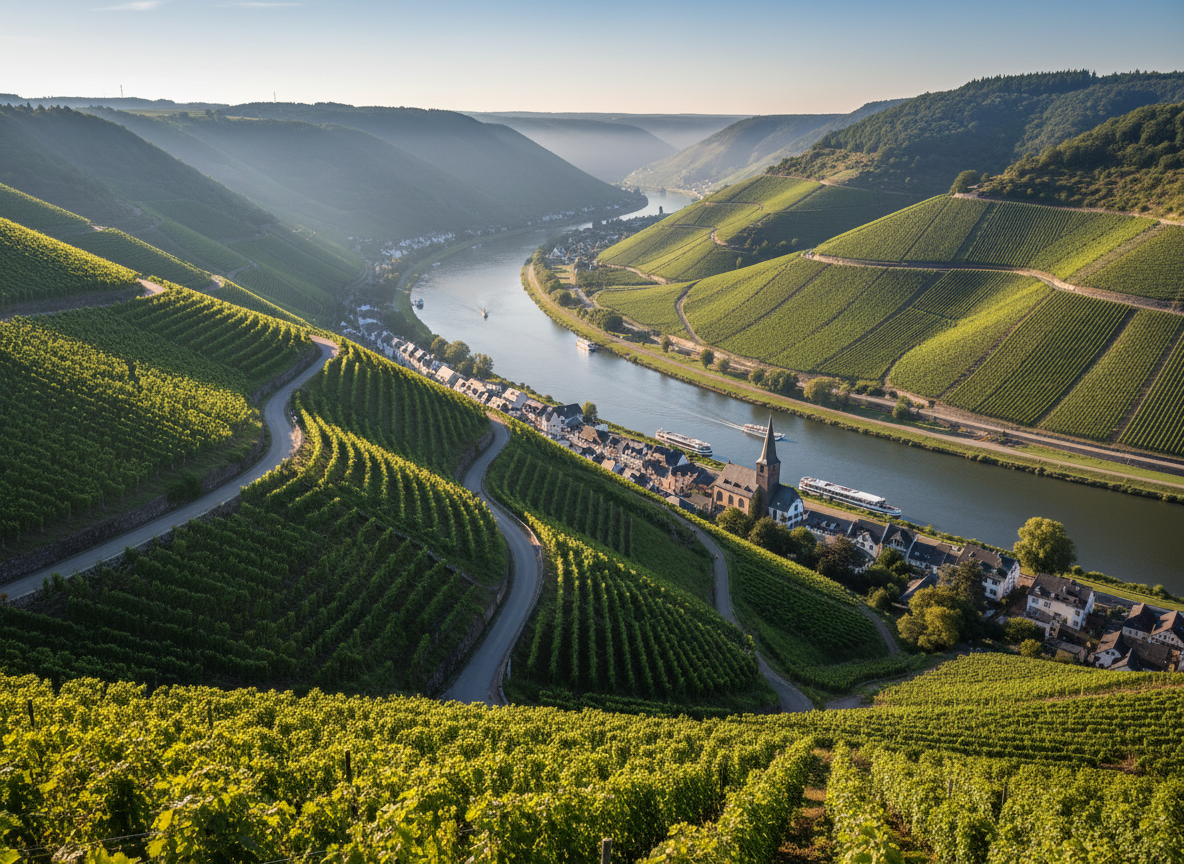
The Mosel river carves a winding path through western Germany, creating some of the steepest vineyard slopes in the world. Many sites are so steep they can only be worked by hand — no tractors, no machines, just people on ladders clinging to slate hillsides. The soils are predominantly blue and grey slate, which gives Mosel Riesling its distinctive mineral character: that electric, almost saline quality that makes the wines so refreshing and age-worthy.
A New Generation
What excites me most about the Mosel right now is the new generation of winemakers who are combining deep respect for tradition with a modern, precise approach in the cellar. Producers like Tom Benz represent this perfectly. Tom works steep slate vineyards with real care, crafting wines that are mineral, finely textured, and true to their sites. His Adventure Riesling is one of the most popular wines in our portfolio — and for good reason.
These young winemakers aren't trying to make Mosel taste like Burgundy or Napa. They're doubling down on what makes the region unique: the slate, the steepness, the cool climate, and the extraordinary ability of Riesling to express terroir with crystalline precision.
Why Mosel Riesling Is Undervalued
Here's the remarkable thing: you can buy a genuinely world-class Mosel Riesling for £12-18. Try finding a Burgundy or Barolo of equivalent quality at that price — it's impossible. The Mosel remains one of the great value propositions in wine, partly because of lingering prejudice against German wine in the UK, and partly because the region's labelling system (Kabinett, Spätlese, Auslese) can be confusing for newcomers.
But that's changing. Our data at Great Wines Direct shows German wine sales growing significantly year on year, driven by younger drinkers who are more adventurous and less burdened by old stereotypes. The Mosel's moment is coming.
How to Start Exploring
If you're new to Mosel Riesling, start with a dry (trocken) style — it's the most accessible for UK palates. Tom Benz's range is an excellent entry point. Then try a Kabinett, which has a touch of residual sweetness balanced by bright acidity — perfect with Asian food or as an aperitif.
The key is to approach Mosel Riesling with fresh eyes. Forget everything you think you know about German wine and let the glass speak for itself. I promise you'll be surprised.
Explore Mosel Riesling
Browse our Tom Benz collection at Great Wines Direct, or get in touch for personalised recommendations.